
I'm a jack of all trades with deep expertise in infrastructure, cloud, networking, and devsecops. In my spare time I also like to play around with self-hosting, embedded devices, camping, permaculture, sailing, and scouting
Sometimes it seems like home automation protocols are isolated islands, preventing devices from being truly useful. Sure, you can find integrations for the big services, but what about the obscure devices? I'm a fan of interoperability and local control wherever reasonable. It's not that I'm against Alexa's or other cloud controlled systems, but I try to keep them where they can't do that much damage if they stopped working. As such, I embrace Home Assistant and the more open protocols where-ever possible. So when the opportunity came up to redo my automation setup and introduce a lot more controllable tech into my life, I jumped on it. This is the first post in a series on how I implemented my Home Assistant <-> Z-Wave/Zigbee bridge.
The Opportunity
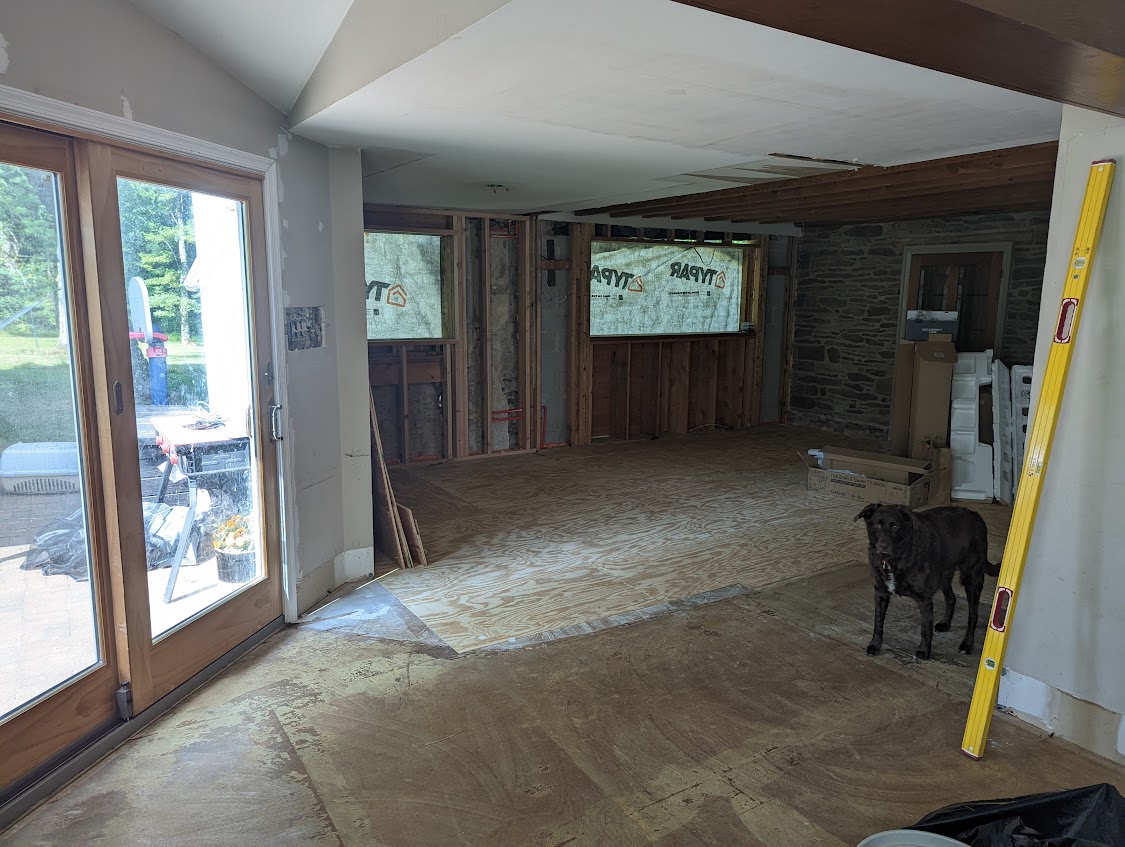
Here's the opportunity: my kitchen as it stands now... It's a bare canvas! With everything open like this, and new fixtures being selected, it's the perfect time to add a serious dose of control-ability into my home.
Goals
My goals for this project are fairly simple: I want a device that can bridge my Zigbee and Z-Wave devices to Home Assistant via MQTT. I want it to be stable, relatively secure, and easy to maintain. Now, just because the goals are simple, doesn't mean the implementation will be... Because, to me, stability and ease of maintenance means putting it in Docker containers... And that brings some complexity with it.
Further, I want this to be a stable platform that I can build on over time. My kids love RGB LEDs and other cool tech, so having a reliable home control network is important to nurture that love going forward.
Devices
What devices do I want to support, exactly? Here's a list, with handy Amazon links. They're not affiliate links yet, though. I'm not sure if I want to get into that whole world or not, yet.
- Aeotec Multisensor 6 - A Z-Wave multisensor for motion, temperature, humidity, light, UV, and vibration sensing. For outdoor entry ways (protected areas).
- Aqara motion sensor - A fantastic, tiny little motion sensor. For discrete interior motion detection.
- Conbee 2 - A Zigbee controller USB stick to interface with the Zigbee network from a Raspberry Pi.
- S2 Stick 700 - A Z-Wave controller USB stick to interface with the Z-Wave network from a Raspberry Pi.
- Zooz ZEN72 - A Z-Wave dimmer switch to control all new and existing light fixtures.
- Zooz ZEN32 - A Z-Wave switch with one switch button and four scene buttons to control outdoor lights and provide convenient scene selection capabilities for the entire first floor.
- Zooz ZSE40 - A Z-Wave motion/light/temp/humidity sensor for interior entry ways to detect a person coming into the home.
More to come
In the next post in this series, I'll dive in and configure docker and zwavejs2mqtt on an old Raspberry Pi 3 that I had lying around. I don't have controllable devices installed, yet, but I can at least start getting some signal data.